The region’s culinary emblem—the Three Pillars of Lombardy Cuisine
1. Risotto alla Milanese: Why is it golden?

The secret to the color and flavor is saffron. This spicy ingredient gives risotto not only its characteristic golden hue but also a subtle floral aroma. Historically, saffron was highly prized in Lombardy: during the Middle Ages and later, it was used not only in cooking but also for decorative and artistic purposes. Legends link saffron to the creation of the Duomo’s decoration—in one form or another, the spice played a role in the city’s artistic practices, emphasizing its cultural significance.
— Cooking technique: rice (usually arborio or carnaroli) is lightly sautéed in butter/oil with onions, then broth is gradually added, and finally, saffron, grated in warm broth, is added, along with plenty of butter and Parmesan for a creamy texture.
2. Ossobuco: The Art of Simmering

Ossobuco is a dish made from beef shank (ossobuco literally means “bone with a hole”), slowly braised until the meat falls easily from the bone and infuses the sauce with a deep, concentrated flavor. This dish is traditionally served with risotto alla Milanese.
The key to the perfect texture is a long, slow simmer over low heat in wine and vegetables, often with the addition of tomatoes and broth.
Gremolata: the final, vibrant note. This mixture of grated lemon zest, garlic, and parsley is added just before serving, refreshing and elevating the braised meat.
3. Panettone: the Christmas king

Panettone is a tall, airy, brioche-like bread filled with candied fruit and raisins. Originating in Milan, it grew out of a local pastry tradition and has become a symbol of Italian Christmas.
Stories about panettone’s origins abound, from simple folk tales about bakers and lovers to professional pastry chefs who perfected the recipe. In any case, panettone is an example of how a local dessert can become a national and international phenomenon.
Where to Find the Taste of Lombardy — From Milan to the Lakes
1. Milan: A City Where Fashion Meets Hearty Cuisine
Where to Try: Opt for authentic trattorias in the Navigli district—these places preserve traditions and often prepare risotto alla Milanese and ossobuco according to family recipes. Look for menu notes about homemade broths, slow cooking, and fresh ingredients.
Atmosphere: Stoves, wooden tables, the hum of conversation, and the aromas—all part of the Lombard gastronomic experience in Milan’s neighborhoods.
2. Lake Como: Waterfront Cuisine and Lighter Classics
How the Cuisine is Changing: Near the water, the emphasis shifts toward freshwater fish and lighter versions of classic Lombard dishes.
Lake fish such as missoltini—traditionally dried and salted lake fish—give the menu a local feel and contrast with the rich city cuisine.
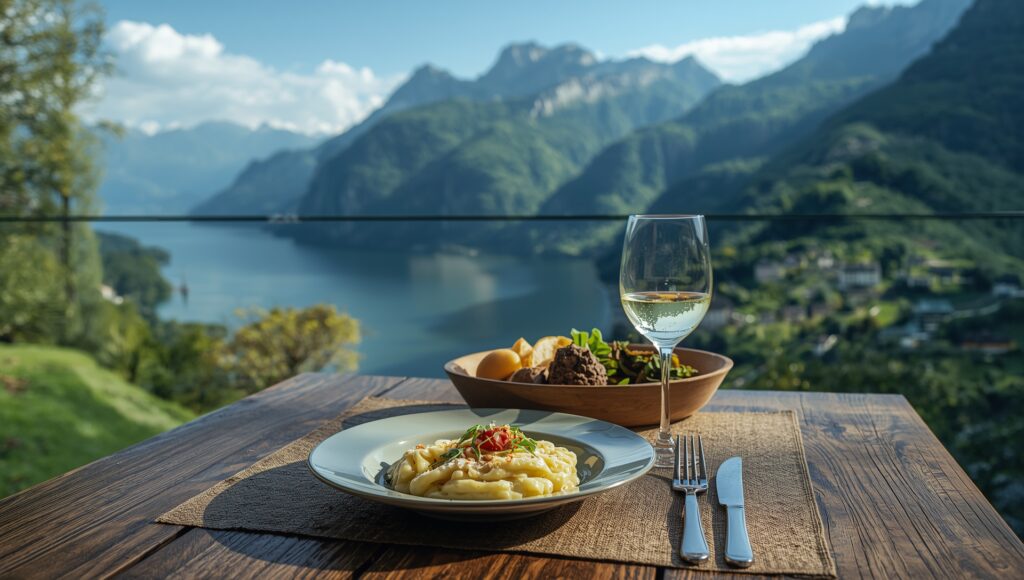
Presentation and aesthetics: Dishes are often served on terraces overlooking the water; freshness, simplicity of presentation, and a delicate balance of flavors are prized here, so as not to overshadow the natural surroundings.
Practical advice: How to avoid mistakes when choosing authentic dishes
- Look for DOC designations for wines and DOP designations for products (for example, DOP Gorgonzola). These labels guarantee origin and compliance with traditional quality standards.
- Ask about the house: at a trattoria, ask whether risotto is made on site and with what kind of rice.
You can ask the chef about the technique of making ossobuco and whether they have gremolata. At pastry shops, ask whether panettone is baked daily or whether they use pre-made loaves. Try these pairings: risotto alla Milanese with ossobuco—a classic combination of flavors. Panettone is the perfect end to a festive meal with a cup of aromatic coffee or a glass of sweet wine.
Lombardy is a region of contrasts: the businesslike chic of Milan and the calm elegance of the lakes, strict fashion lines and warm family recipes. Its cuisine is more than just a collection of dishes, but history, traditions, and culture on a plate: saffron, braised meat, and festive panettone—three pillars that tell the story of Lombardy as well as any guidebook.
If you want to get a feel for the region, start with risotto, continue with ossobuco, and finish with a warm slice of panettone by the window overlooking the creamy facades of Milan or the silvery surface of Lake Como.