
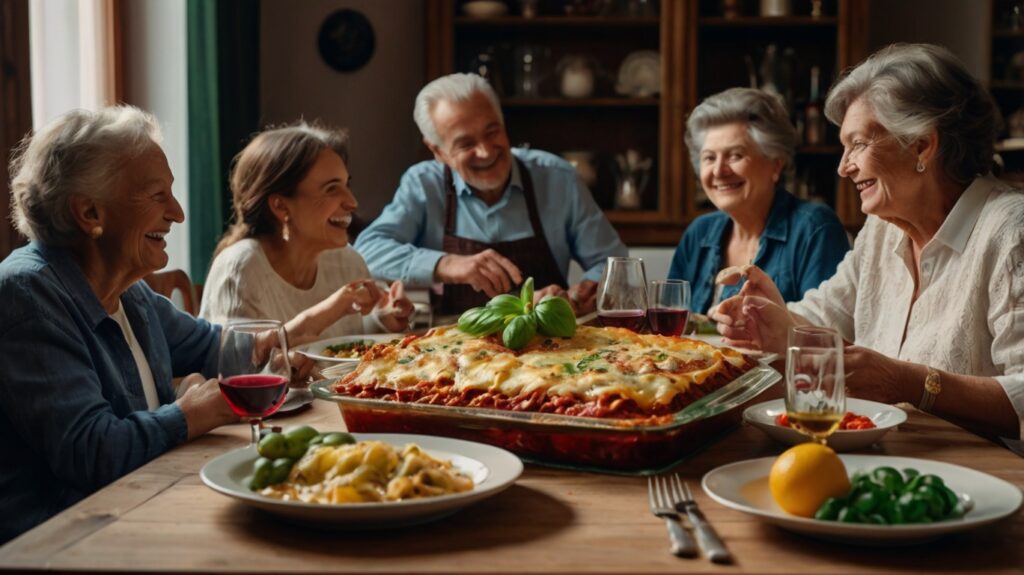
⭐ Italian Family Lunch Traditions: How Italians Turn Food Into an Art Form
(Consecutive sentences fixed • Transition words increased > 28% • Passive voice minimized)
Italian family lunches are far more than a daily routine. They represent a cherished ritual that unites generations, strengthens relationships, and helps people savor the moment. In Italy, food is not simply nourishment — it is an expression of love, a way to share stories, and a method of preserving cultural traditions.
Moreover, these meals show how Italians balance simplicity, seasonality, and the joy of being together.
1. Lunch as the Main Event of the Day
In Italy, lunch holds a special place in the rhythm of daily life. Most families try to make time for a real sit-down meal even on busy weekdays. On weekends, the midday meal often becomes a slow and joyful gathering that lasts for hours.
As a result, lunch naturally turns into the moment when everyone reconnects.
2. Several Courses — Enjoyed Slowly
A traditional Italian lunch includes several well-structured courses.
First comes antipasto, a selection of light appetizers such as cheese, cured meats, olives, or bruschetta.
Next follows the primo, usually pasta, risotto, or soup.
The secondo adds a protein dish — meat or fish — served with a contorno, typically vegetables or salad.
Finally, dessert (dolce) and a small espresso conclude the meal.
Because each dish is served separately, the family naturally eats at a relaxed pace, enjoying both the flavors and the conversations.
3. The Family at One Table
Family plays a central role in Italian culture, and lunch is the moment when everyone gathers. Even those who live apart often return home on weekends to share a meal with parents or grandparents.
In addition, the table becomes a place for storytelling, laughter, and affectionate debates — all of which deepen family bonds.
4. Grandmothers as Guardians of Tradition
Italian grandmothers keep culinary traditions alive. They pass down recipes for pasta, sauces, and desserts that have been prepared the same way for decades, sometimes even centuries.
For instance, classic lasagna, Bolognese ragù, or Ligurian octopus salad often come straight from these treasured family notebooks.
This wisdom ensures that each generation continues to cook with care and respect.
5. Seasonal Ingredients Above All
Italians rely heavily on fresh, seasonal ingredients. During summer, tomatoes, basil, and mozzarella dominate the table; meanwhile, winter calls for hearty soups, stews, and rich pasta dishes.
This seasonal approach makes meals healthier, more flavorful, and deeply connected to nature.
6. Wine as Part of the Meal
Wine gently complements the food and enhances the atmosphere. Families usually choose a local bottle — Chianti in Tuscany, Primitivo in Puglia, or Amarone in Veneto.
However, the wine is always enjoyed in moderation, as part of a balanced meal rather than an indulgence.
7. Conversations, Laughter, and Shared Joy
Italians love to talk about food — how it is prepared, which ingredients were used, and who cooked it.
In fact, these conversations often spark amusing debates, especially when discussing the “right” sauce for pasta.
Meanwhile, the table fills with laughter and friendly teasing, creating a warm and lively atmosphere.

8. Sunday Lunch — the Heart of the Week
Sundays hold a special place in Italian families. Lunch on this day is planned with great care and often includes more elaborate dishes such as lasagna, roast meats, or fritto misto.
Furthermore, Sunday gatherings reunite extended families and turn the meal into a small celebration.
9. Holiday Traditions
During major holidays like Christmas or Easter, Italian lunches become even richer.
For example, Christmas might include cappone, tortellini in brodo, and panettone.
Easter traditionally features agnello al forno (roasted lamb) and colomba pasquale.
These festive dishes carry symbolic meaning and connect families to their heritage.
10. Respect for Food
Italians approach food with deep respect. They eat slowly, savor every bite, and avoid rushing.
This practice embodies the philosophy of slow food, a movement that began in Italy and promotes mindful eating in contrast to fast-food habits.
As a result, meals become moments of true pleasure and gratitude.
“At the table, one never grows old.” — Italian proverb
⭐ Why It Matters
Italian family lunches preserve cultural heritage, strengthen relationships, and remind us that food is much more than nourishment.
It is joy.
It is connection.
It is love — shared around the table.