🇮🇹 Tuscany: Gastronomic Traditions and the Best Dishes of the Region
Tuscany lies in the heart of Italy, and few regions express the soul of the country as deeply as this one. Beyond its rolling hills, medieval towns, and Renaissance masterpieces, Tuscany offers a culinary world built on simplicity, authenticity, and deep respect for local ingredients. As soon as you arrive, you immediately feel that food here is not a trend but a heritage.


Traditional Tuscan Ingredients
Tuscan cuisine always starts with honest, clean flavors.
For example, extra virgin olive oil is not just a dressing—it is the foundation of almost every dish. In addition, fresh vegetables, aromatic herbs, wild meats, legumes, and seafood from the Tyrrhenian coast form a balanced, seasonal pantry.
Moreover, bread plays a special role. The famous pane toscano, baked without salt, pairs perfectly with soups, cured meats, and hearty stews. Meanwhile, local cheeses—especially pecorino from Pienza—add richness and depth to even the simplest meals.
🍽️ Traditional Dishes You Shouldn’t Miss
1. Bruschetta with Tomatoes and Basil

This dish may look simple, yet its flavor depends entirely on the quality of each ingredient. Toasted bread, ripe tomatoes, fresh basil, garlic, and a drizzle of vibrant olive oil create a combination that immediately captures the essence of Tuscany. It’s a perfect reminder that great food often comes from the simplest ideas.
2. Ribollita

Ribollita is one of Tuscany’s most beloved comfort foods. Instead of relying on heavy ingredients, the recipe transforms beans, cabbage, vegetables, and leftover bread into a rich and warming soup. Because the dish is reheated the next day (hence “reboiled”), the flavors become even deeper, making ribollita ideal for cool evenings.
3. Bistecca alla Fiorentina

Florentine steak is a true symbol of Tuscan meat tradition. Unlike many complex steak dishes, the preparation here remains straightforward: a thick cut of Chianina beef, grilled over open flame and seasoned only with salt, pepper, and a touch of olive oil. The result is bold, juicy, and unforgettable.
4. Pappardelle with Wild Boar or Mushrooms

Another timeless favorite is pappardelle, wide ribbons of pasta often served with wild boar ragù or seasonal mushrooms. This pairing highlights the rustic, earthy side of T1uscany, where forests and hills often influence what appears on the table.
5. Cantucci with Vin Santo

To end a Tuscan meal properly, many locals enjoy cantucci—crunchy almond cookies—dipped into a small glass of sweet Vin Santo. This combination brings together texture, aroma, and tradition in a wonderfully balanced way.
🍷 Tuscany and Its Wines
No visit would be complete without discovering Tuscan wines.
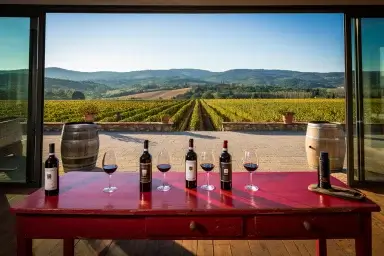
Above all stands Chianti, known for its bright acidity, cherry notes, and perfect compatibility with hearty dishes.
However, Tuscany also offers several prestigious wines:
-
Brunello di Montalcino — structured, elegant, and long-aged
-
Vino Nobile di Montepulciano — smooth and expressive
-
Vernaccia di San Gimignano — one of Italy’s great white wines
Together these wines reflect the region’s landscape and centuries-old craftsmanship.


🧳 Tips for Travelers Seeking Authentic Tuscan Flavors
If you travel to Tuscany for its cuisine, consider visiting local farms and small agriturismi. Many of them offer tastings, cooking demonstrations, and lunches prepared from products grown on-site. As a result, you gain a more intimate and genuine experience of the region.
Additionally, never hesitate to ask locals for recommendations. They often point you toward family-run trattorias where recipes remain unchanged for generations.
Conclusion
Tuscany invites you into a world where food celebrates simplicity, seasonality, and tradition. Every dish—from rustic soups to refined meats—tells a story about the land and the people who care for it. After tasting Tuscan flavors and wines, you carry a piece of this region with you, along with a desire to return.