Italian Artichokes: Why Spring Without Them Is Unthinkable
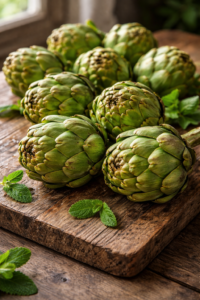
In Italy, spring has a taste.
It tastes like artichokes.
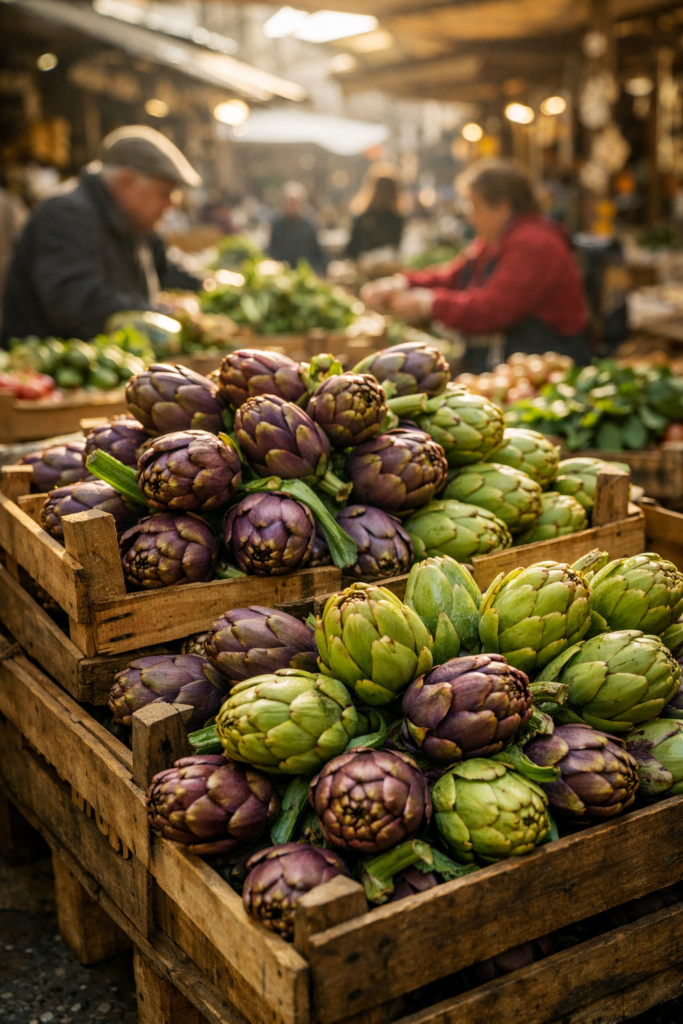
Walk into any market in March or April. You will see them everywhere. Big piles of round green vegetables. Purple-tipped leaves. Farmers proudly showing off their crop.
Italians go crazy for them. Nonnas buy them by the kilo. Chefs build whole menus around them. Families argue about the best way to cook them.
If you visit Italy in spring, you must eat artichokes. Not once. Many times. In different cities. Cooked different ways.
Here is why this vegetable matters. And where to try the best versions.
The Spring Artichoke: A Short Season
Artichokes grow in Italy all year. But spring is special.
The first artichokes appear in late February. They peak in March and April. By May, they start to disappear.
Why the fuss? Because spring artichokes are younger and tenderer. The hearts are soft. The leaves are fleshy. You can even eat some varieties raw.
Winter artichokes are tougher. You have to cook them longer. Spring artichokes? A quick fry. A slow braise. Maybe just a drizzle of oil. Done.
This is why every Italian region celebrates spring with artichoke festivals .
The Main Varieties You’ll See
Not all artichokes are the same. Italy grows dozens of types. In spring, look for these:
1. Romanesco (Rome and Lazio)
What it is: Large, round, green. No thorns. The king of Roman artichokes .
Where it grows: North of Rome, near Ladispoli and Civitavecchia .
Best for: Carciofi alla Romana and Carciofi alla Giudia.
2. Violetta di Sant’Erasmo (Venice)
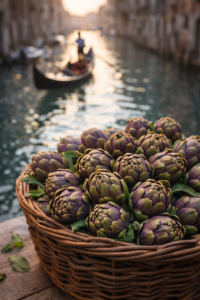
What it is: Small, purple, delicate. Grows on the island of Sant’Erasmo in the Venetian Lagoon .
Where it grows: Venice lagoon .
Best for: Raw in salads. Or with seafood. The salt air gives them a unique flavor .
Special status: They have protected status. That means they are special and recognized by law .
3. Violetta di Castellammare (Naples area)
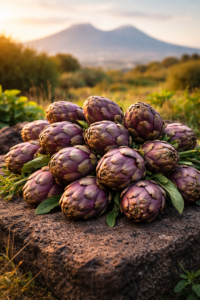
What it is: Purple artichokes from the shadow of Mount Vesuvius. They are called “naked” because they have no thorns .
Where it grows: Castellammare di Stabia, near Pompeii .
Best for: Roasting over coals. Just oil and salt .
Local tradition: They are a symbol of spring. Families eat them at Easter .
4. Spinosi (Sardinia and Liguria)
What it is: Artichokes with thorns. The name means “thorny” in Italian .
Where it grows: Sardinia and Liguria .
Best for: Stews and braises. The thorns protect the tender heart inside.
Local saying: Some Italians say the thorny ones taste better .
The Two Classic Roman Ways
Rome is the artichoke capital of Italy. Two recipes dominate. You must try both.
1. Carciofi alla Romana (Roman-Style)
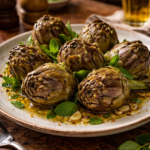
What it is: Artichokes braised slowly. They are stuffed with garlic, mint (mentuccia), and parsley. Then cooked in olive oil and white wine until soft .
The result: Tender. Fragrant. Full of flavor. You can eat them warm or at room temperature .
Where to try: Any traditional Roman trattoria in spring. Look for it on the menu as a contorno (side dish).
2. Carciofi alla Giudia (Jewish-Style)
What it is: The most famous Roman artichoke dish. From the Jewish Ghetto. Invented by Roman Jews in the 16th century .
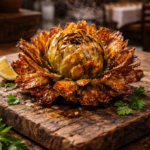
How it’s made: The artichoke is pressed flat during frying. The leaves open up like a flower. The outside becomes crispy and golden. The inside stays soft and sweet .
The result: A miracle of texture. Crunchy leaves. Tender heart. You eat it with your hands, leaf by leaf .
Where to try: Restaurants in the Jewish Ghetto. Via del Portico d’Ottavia is the place .
Fun fact: In 2018, there was a big debate. Israel’s rabbinate said artichokes might not be kosher because insects could hide in the leaves. Roman Jews fought back. They said their artichokes are too tight for bugs. The dish is too important to their culture .
Beyond Rome: Other Spring Artichoke Dishes
Venice: Baby Artichokes Raw
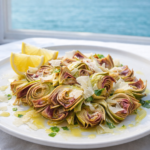
On Sant’Erasmo island, they harvest tiny artichokes called castraure. These are the first buds of the season. They are small, tender, and incredibly sweet .
How they eat them: Raw. Sliced thin. With olive oil, salt, and Parmesan cheese. Simple. Perfect .
Also try: Pasta with artichokes and scampi (langoustines). A Venetian spring specialty .
Naples: Roasted Over Coals
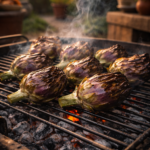
In Campania, they roast purple artichokes on the grill. Just olive oil, salt, and fire. The outside gets charred. The inside gets smoky and sweet .
When: Easter time. Families gather around the grill .
Tuscany: Artichoke Frittata
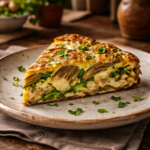
Tuscans love simple food. In spring, they make frittatas with artichokes and wild asparagus. Maybe some pecorino cheese. That’s it.
Puglia: Stuffed Artichokes
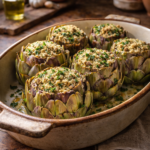
Puglia is a big artichoke region. They stuff them with breadcrumbs, garlic, parsley, and cheese. Then bake them in the oven. A classic Sunday lunch.
How Italians Buy and Eat Artichokes
At the Market
Watch how Italians shop for artichokes in spring. They touch them, smell them, or squeeze them gently.
What they look for:
-
Tight, compact leaves (means fresh)
-
Heavy for their size (means juicy)
-
Squeaky leaves when pressed (means very fresh)
Sometimes the vendor cleans them for you right there. Removes the tough outer leaves. Trims the stem. Drops them in lemon water .
At Home
Italian families have their favorite recipes. Every nonna has her method.
Some fry them. Others stew them. Some add them to risotto. Many use them in lasagna instead of meat.
One thing is certain: In spring, artichokes appear at every family meal.
The Ladispoli Artichoke Festival
If you really love artichokes, plan your trip around this festival.
Where: Ladispoli, a coastal town about an hour from Rome .
When: April. Since 1951 .
What happens: For three days, the town celebrates the artichoke. There are 100 food stalls. Cooking contests. Live music. Fireworks on Sunday night .
The best part: Free samples. Fried artichoke wedges handed out to everyone. Local restaurants serve special artichoke menus .
The vibe: Old school. Charming. Local. Not touristy .
If you are in Rome in April, go. It is worth the trip.
A Quick Artichoke Glossary
| Italian Term | Meaning |
|---|---|
| Carciofo | Artichoke |
| Carciofi | Artichokes (plural) |
| Romanesco | The round Roman variety |
| Violetto | Purple variety |
| Spinoso | Thorny variety |
| Castraure | Baby artichokes (Venice) |
| Mammolo | Large Roman artichoke |
| Barba | The fuzzy “choke” inside (means “beard”) |
| Mentuccia | Wild mint used in Roman recipes |
Tips for Eating Artichokes in Italy
1. Don’t be scared.
If you’ve never eaten a whole artichoke, it can look confusing. Watch Italians. They pull off one leaf at a time. Dip it in sauce. Scrape the soft part with their teeth. Discard the rest. The heart at the end is the prize.
2. Use your hands.
For fried or braised artichokes, hands are fine. Especially for Carciofi alla Giudia. That is how Romans eat them.
3. Ask what’s in season.
In a restaurant, say: “Quali sono i carciofi di stagione?” (Which artichokes are in season?). Staff will appreciate the question.
4. Try them raw.
If you see raw artichoke salad on a menu, order it. Spring artichokes are sweet enough to eat uncooked. With Parmesan and lemon, it is a revelation.
5. Go to a market first.
Before you eat artichokes in a restaurant, see them at a market. Campo de’ Fiori in Rome. Rialto in Venice. Sant’Ambrogio in Florence. The piles of purple and green are beautiful.
Why Italians Love Artichokes So Much
Maybe it is the taste. Earthy. Slightly nutty. A little bitter. Totally unique.
Maybe it is the work. Cleaning artichokes takes time. You have to care. You have to be patient. That effort makes the meal special.
Maybe it is the history. Romans have been eating them for centuries. The Jewish Ghetto recipe is 500 years old . Families pass down their techniques.
Maybe it is the season. Spring artichokes mean winter is over. The sun is back. The markets are colorful again. People are happy.
For all these reasons, Italians go wild when the first artichokes appear.
And you should too.
Final Thoughts
You cannot understand Italian spring without eating artichokes.
Try them in Rome, Venice, and Naples. They’re delicious raw or fried. Try them stewed, too.
Each region has its own way. Each cook has their own secret.
But one thing is universal: In spring, Italians cannot stop talking about artichokes. Now you will understand why.
Buona primavera e buon appetito! 🌿